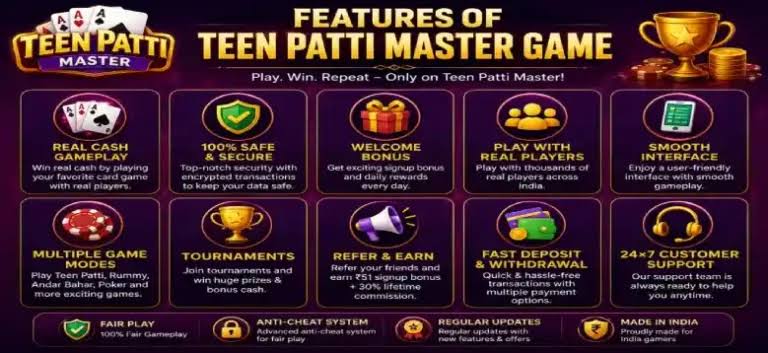
The digital gaming world brings together traditional card games and modern interactive entertainment, creating different ways for people to learn about familiar gaming formats. Master Slots Game is a topic that can introduce readers to several categories, including slots, Rummy, and Teen Patti. While each category has its own rules and mechanics, understanding the basics helps users explore the wider online gaming environment with greater awareness.
Rummy and Teen Patti have long-standing connections with card-game traditions, particularly in India. Their digital versions introduce familiar gameplay concepts through online interfaces, tutorials, and different game formats. By learning how these games work, readers can better understand their differences, common features, and important safety considerations.
Understanding Master Slots Game
Master Slots Game can serve as a starting point for exploring different digital gaming categories. Depending on the platform, the available content may include reel-based games, card games, and other interactive formats.
Slots games generally use reels and symbols to determine outcomes according to predefined rules. Many versions include visual themes, bonus features, and different layouts. However, the specific mechanics depend on each title, and previous results cannot reliably predict future outcomes in properly implemented random number generator-based games.
Card games such as Rummy and Teen Patti follow different structures. They involve playing cards, understanding combinations or rankings, and making decisions according to the rules of a particular variation.
Learning the distinctions between these categories helps users understand what each game offers rather than assuming that all online games operate in the same way.
Rummy Basics: Learning Cards, Sets, and Sequences
Rummy is a popular card-game category in which players generally aim to arrange their cards into valid combinations. These combinations commonly include sets and sequences, although exact requirements vary by version.
A set usually consists of cards with the same rank and different suits. A sequence generally consists of consecutive cards in the same suit. Players typically draw cards and discard unwanted ones while working toward a valid hand.
Successful decision-making may involve observing available cards, planning combinations, and deciding which cards to retain. Depending on the variation, players may also consider cards discarded by opponents.
Digital Rummy platforms may provide different formats, instructions, and practice options. Beginners should review the rules of their chosen version before participating in a game.
Although experience and strategic decisions can influence gameplay, chance remains an important factor. Skill does not guarantee a particular result, especially when a version includes real-money participation.
Teen Patti Basics: Exploring a Traditional Card Game
Teen Patti is a traditional Indian card game commonly played with three cards per player. Different versions may introduce variations in hand rankings, dealing procedures, and gameplay rules.
The basic experience often involves comparing card combinations and making decisions according to the particular format. Understanding hand rankings is essential because the strength of a hand determines its position under the game’s rules.
Online Teen Patti versions can include digital tables, multiplayer features, and different visual designs. Some formats focus on casual entertainment, while others involve betting or other financial risks.
New players should first understand the rules and terminology of their selected variation. They should also check whether the platform explains its conditions clearly and operates in accordance with applicable laws.
Teen Patti involves uncertainty, and no strategy can guarantee winning results. When money is involved, users should be especially careful about spending limits and the risks of repeated play.
Comparing Rummy and Teen Patti
Although both games use playing cards, their objectives and decision-making processes differ.
Rummy generally focuses on creating valid card combinations through drawing, discarding, and planning. Players work toward organizing their hands according to specific requirements.
Teen Patti commonly focuses on comparing three-card hands and understanding their rankings. Depending on the version, decisions may also involve betting rules and evaluating uncertainty.
Both games require familiarity with their individual rules. Their digital interfaces may look similar, but their mechanics, objectives, and levels of strategic decision-making are different.
Understanding these differences helps readers choose which format they want to learn about without relying solely on promotional descriptions.
Digital Features and Online Safety
Modern gaming platforms may offer mobile-friendly layouts, account settings, game instructions, and interactive menus. These features can make different games easier to navigate, although the quality and availability of features vary.
Before using a platform, review its privacy policy, security measures, customer support details, and payment conditions. Avoid services that promise guaranteed profits or make unrealistic claims about winning opportunities.
It is also important to distinguish free entertainment from real-money gambling. Where gambling is restricted or prohibited, users should respect local laws. Age requirements must also be followed.
If a game involves money, set firm limits, never use essential household funds, and avoid chasing losses. Taking breaks and stopping when play becomes stressful can help prevent unhealthy habits.
Conclusion
Exploring master slots game through Rummy and Teen Patti basics provides an introduction to two familiar card-game categories within the broader digital gaming landscape. Rummy emphasizes sets, sequences, and card organization, while Teen Patti focuses on three-card hands and their rankings.
Learning the rules, recognizing the differences between game formats, and understanding the potential risks can help readers make informed decisions. Online gaming should not be treated as a reliable source of income. A responsible approach prioritizes entertainment, personal safety, and awareness of applicable regulations.